Why You Should Make Your Own Coffee: Embrace the Craft
Share
If you're buying a café latte every day, you're not just buying coffee — you're paying rent on someone else's espresso machine. That daily habit adds up to serious money over a year. A home espresso setup that makes better coffee costs a fraction of what you'd spend on cafés annually — and pays for itself well before the year is out.
Here's why making your own coffee at home is one of the best upgrades you can make — especially in India, where the home espresso scene is finally catching up to the rest of the world.
The Money Math: Home Espresso vs. Café Visits
Let's break it down qualitatively:
| Expense | Café (daily) | Home espresso |
|---|---|---|
| Daily cost | The price of a specialty latte | A small fraction of café pricing (beans + milk) |
| Annual cost (1 cup/day) | Equivalent to a significant yearly outlay | Modest consumables spend |
| Equipment (one-time) | — | Machine + grinder, paid once |
| Break-even | — | A few months of daily home brewing |
Even with a mid-range setup — say a HiBREW H10A and a decent hand grinder — your total one-time spend is roughly a few months of daily café lattes. Everything after that is pure savings, and the coffee is better.
If you want a fully electric setup, the H10A + G5 bundle gets you a machine and an electric grinder in one shot — no hand-grinding required.
You Get Total Control Over Your Cup
At a café, you get what the barista makes. At home, you control everything:
- Beans — try single-origin Indian coffees from Chikmagalur, Araku Valley, or Coorg. Roasters like Blue Tokai, Corridor Seven, and Curious Life ship fresh across India.
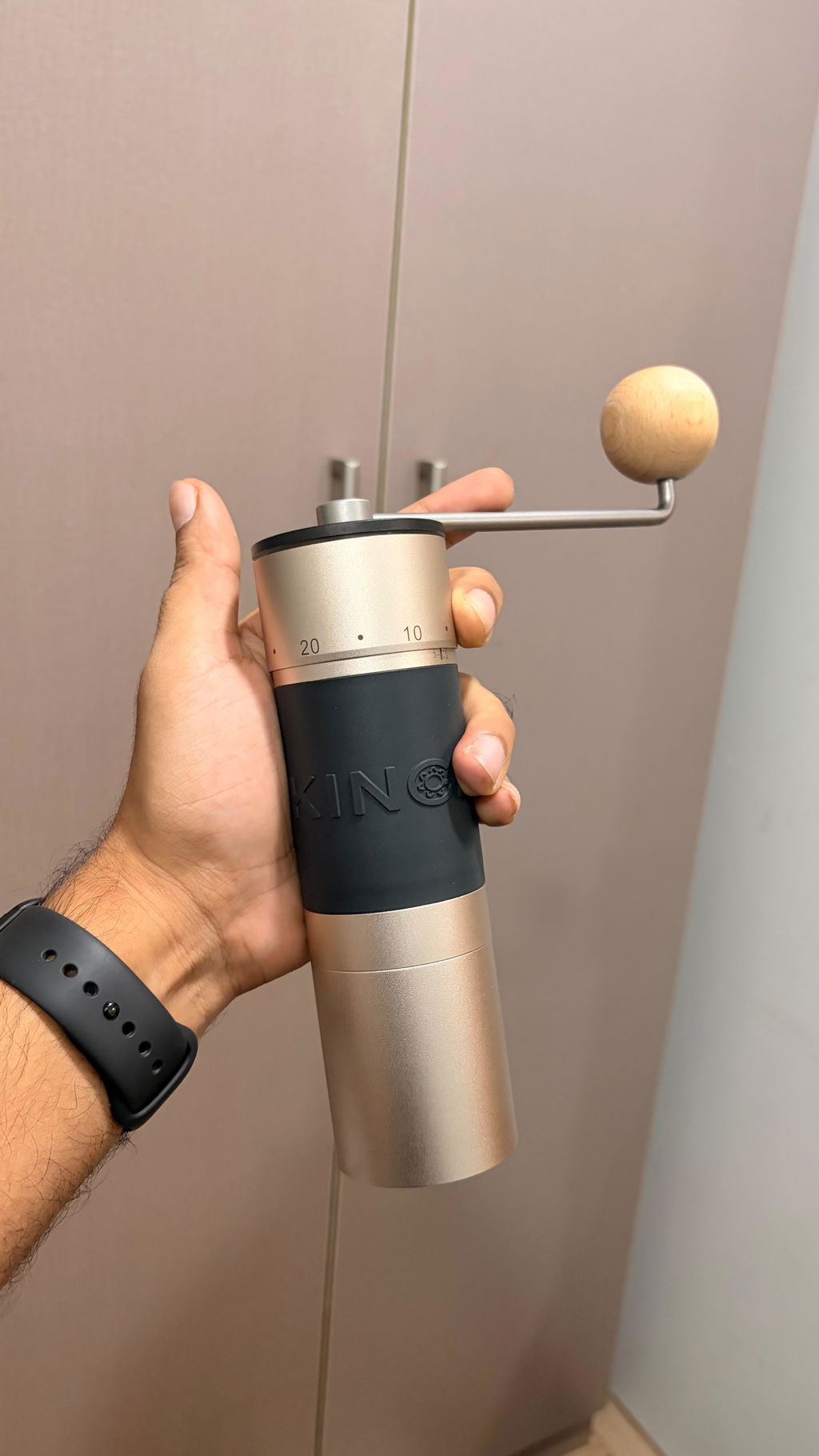
- Grind size — espresso demands a fine, consistent grind. A proper burr grinder like the HiBREW G5 (31 settings) or the 1Zpresso X Ultra (stepless) gives you precision that no café pre-ground bag can match.
- Dose and ratio — dial in your recipe to the gram. A 1:2 ratio at 18g in, 36g out in 25–30 seconds is the starting point for espresso — then adjust to taste.
- Milk texture — a machine with a proper steam wand (like the H10 Plus or Gaggia Classic E24) lets you texture microfoam for latte art at home.
This is what we mean by Your Coffee. Your Rules.
It's Healthier Than You Think
A café mocha or flavoured latte can pack 300–400 calories with syrups, whipped cream, and full-fat milk. At home, you control exactly what goes into your cup. Black espresso is essentially zero calories. Add oat milk, skip the sugar, adjust to your dietary needs — no compromises, no surprises.
Better for the Environment
Every takeaway coffee comes with a disposable cup, lid, sleeve, and stirrer. Most of these aren't recycled. Brewing at home with a reusable cup eliminates that waste entirely. Coffee grounds can go straight into compost or garden soil. It's a small change that adds up over hundreds of cups a year.
The Ritual Is the Point
There's a reason the home espresso community is growing fast in India. It's not just about caffeine — it's about the process. Weighing beans, grinding fresh, pulling a shot, steaming milk. It's a 5-minute ritual that sharpens your morning and gives you something to look forward to.
You don't need to spend a fortune to start. A decent hand grinder and a Moka pot gets you excellent coffee on a tight budget. Ready for espresso? The HiBREW H10A is the most popular entry point in India — PID temperature control, 58mm portafilter, 20-bar pump.
Where to Start
If you're new to home espresso, here's the simplest path:
- Pick a machine — the HiBREW H10A is our best-selling entry point. Want more control? The H10 Plus adds adjustable temperature.
- Get a grinder — this matters more than the machine. The HiBREW G5 is the easiest electric option. The 1Zpresso X Ultra is our best manual grinder.
- Buy fresh beans — any Indian specialty roaster, roasted within 2–4 weeks. Start with a medium roast.
- Dial in — 18g dose, fine grind, aim for 36g out in 25–30 seconds. Adjust grind finer (slower) or coarser (faster) until it tastes right.
Need the full breakdown? Read our complete home espresso setup guide.
Frequently Asked Questions
How much does a home espresso setup cost in India?
A complete home espresso setup in India typically pairs a mid-range machine with a capable grinder. The HiBREW H10A paired with a hand grinder is the most popular entry point. Bundles like the H10A + G5 offer even better value with an electric grinder included. For current pricing, check the product pages.
Is making espresso at home really cheaper than going to a café?
Yes. A daily café latte habit adds up to a significant sum over a year. A home espresso setup is a one-time purchase plus modest ongoing spend on beans and milk. Most home setups pay for themselves within a few months of daily use.
Do I need a grinder for espresso?
A burr grinder is essential for espresso. Pre-ground coffee loses freshness within minutes and can't be adjusted for espresso's narrow grind range. A good grinder matters more than an expensive machine — it's the single biggest upgrade you can make.
What's the best beginner espresso machine in India?
The HiBREW H10A is India's best-selling entry-level espresso machine. It has PID temperature control, a 58mm commercial-size portafilter, and a 20-bar pump. For a step up, the HiBREW H10 Plus adds adjustable brew temperature.
Can I make café-quality coffee at home?
Absolutely. With fresh beans, a proper burr grinder, and a machine with PID temperature control, home espresso can match or exceed what most Indian cafés serve. The difference is consistency — at home, you can dial in your exact recipe and repeat it every morning.