

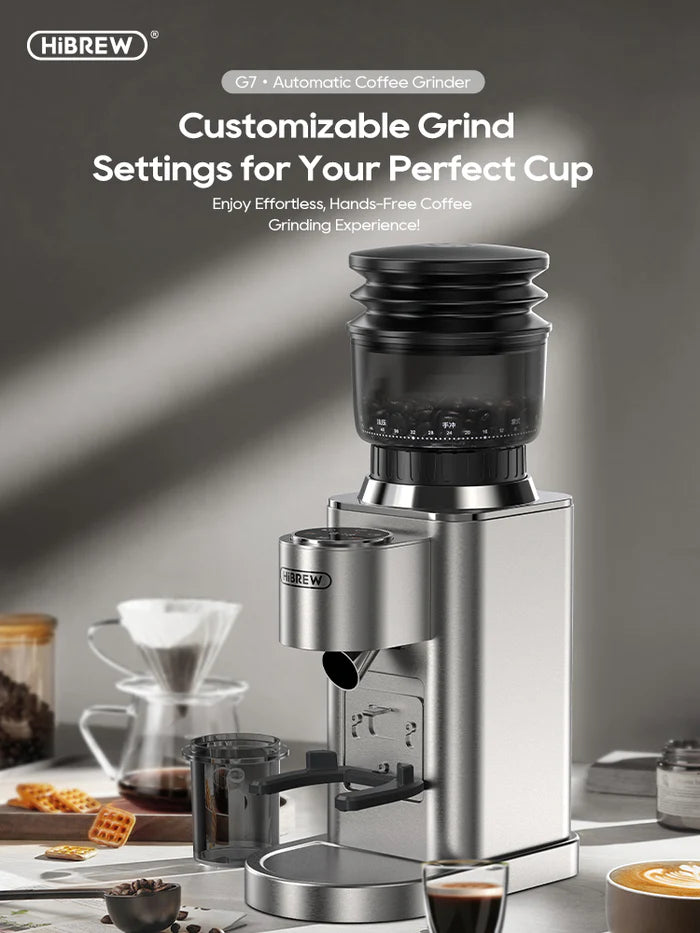

Espresso
Build Your Bar
Machines and essentials for a serious home espresso setup.
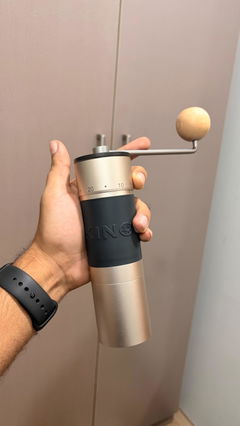
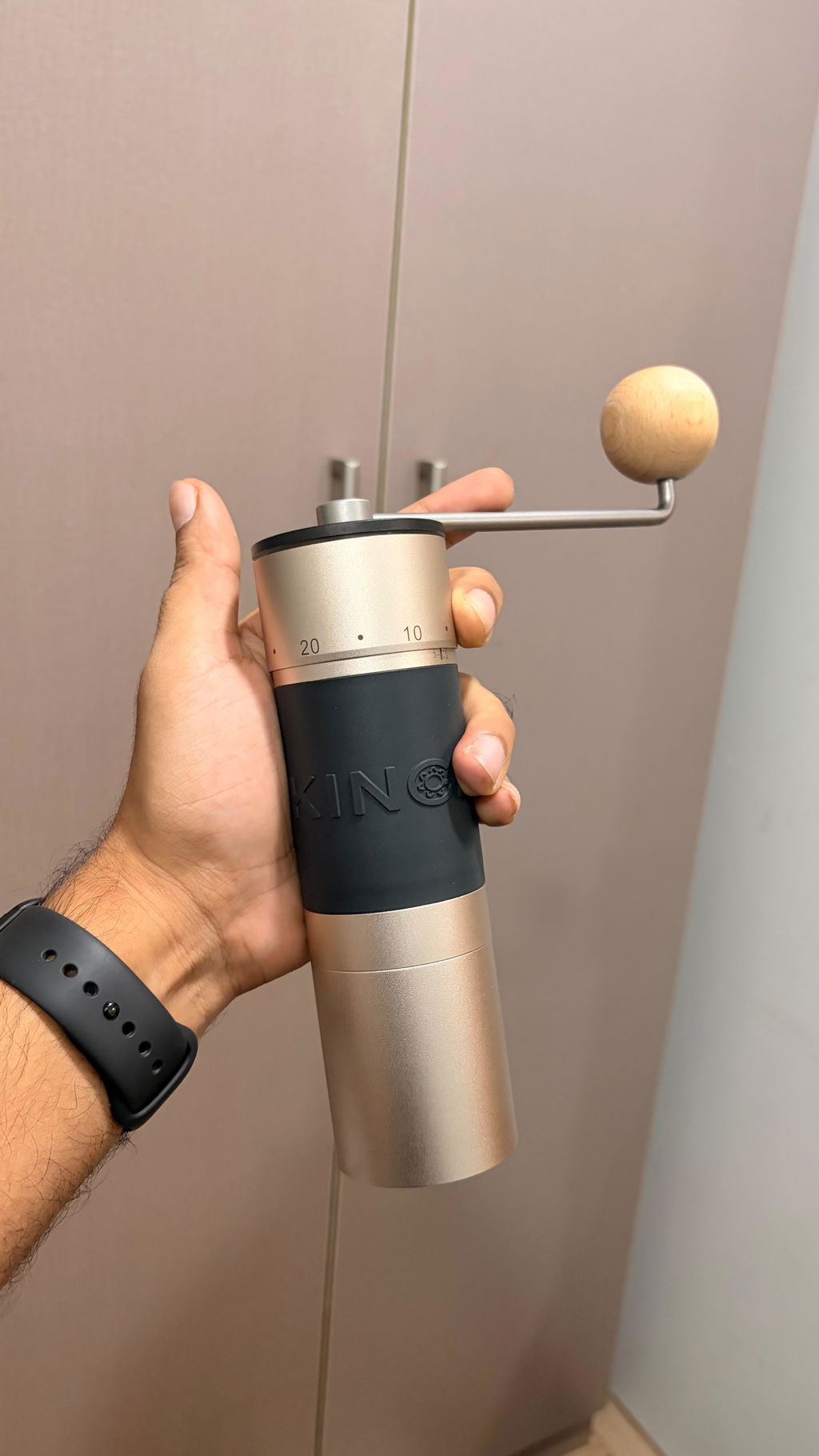
A burr grinder crushes beans between two abrasive surfaces for a uniform, adjustable grind. A blade grinder chops randomly — producing an uneven mix of powder and chunks that extract at different rates and make consistent espresso or pour-over impossible. A burr grinder is the foundation of good coffee at home.
Conical burrs (like the HiBREW G3's 40mm conical) have a cone-shaped inner burr inside a ring — quieter, cooler, and produce a slightly rounder flavour. Flat burrs (like the Eureka Mignon Classico's 50mm flat) cut more aggressively for a more uniform particle size — favoured for espresso clarity and precision. Both produce excellent results when properly adjusted.
Espresso requires the finest grind — target 25–30 seconds for a 1:2 ratio. Pour-over needs medium-fine to medium. French press and cold brew need coarse. Start at the manufacturer's recommended position and adjust based on taste: bitter/slow means grind coarser, sour/fast means grind finer.
Adjust one step at a time and pull a shot after each change. Target 25–30 seconds from first drip to your yield weight (1:2 ratio). Sour and fast: go finer. Bitter and slow: go coarser. Once dialled in, note your setting — switching to a new bag of coffee may require re-dialling, especially if the roast level changes.
Run a grinder cleaning tablet (like Grindz) through it monthly — treat it like coffee beans, then purge with a few grams of real coffee. Brush the hopper and grounds bin after each session. Remove the outer burr quarterly for a deep brush clean. Never use water on the burrs — even rust-resistant steel corrodes if left wet.
Warranty varies by brand. For HiBREW grinders, view the HiBREW warranty here. For other brands, check the product listing or contact support@fixcoffee.in for details.